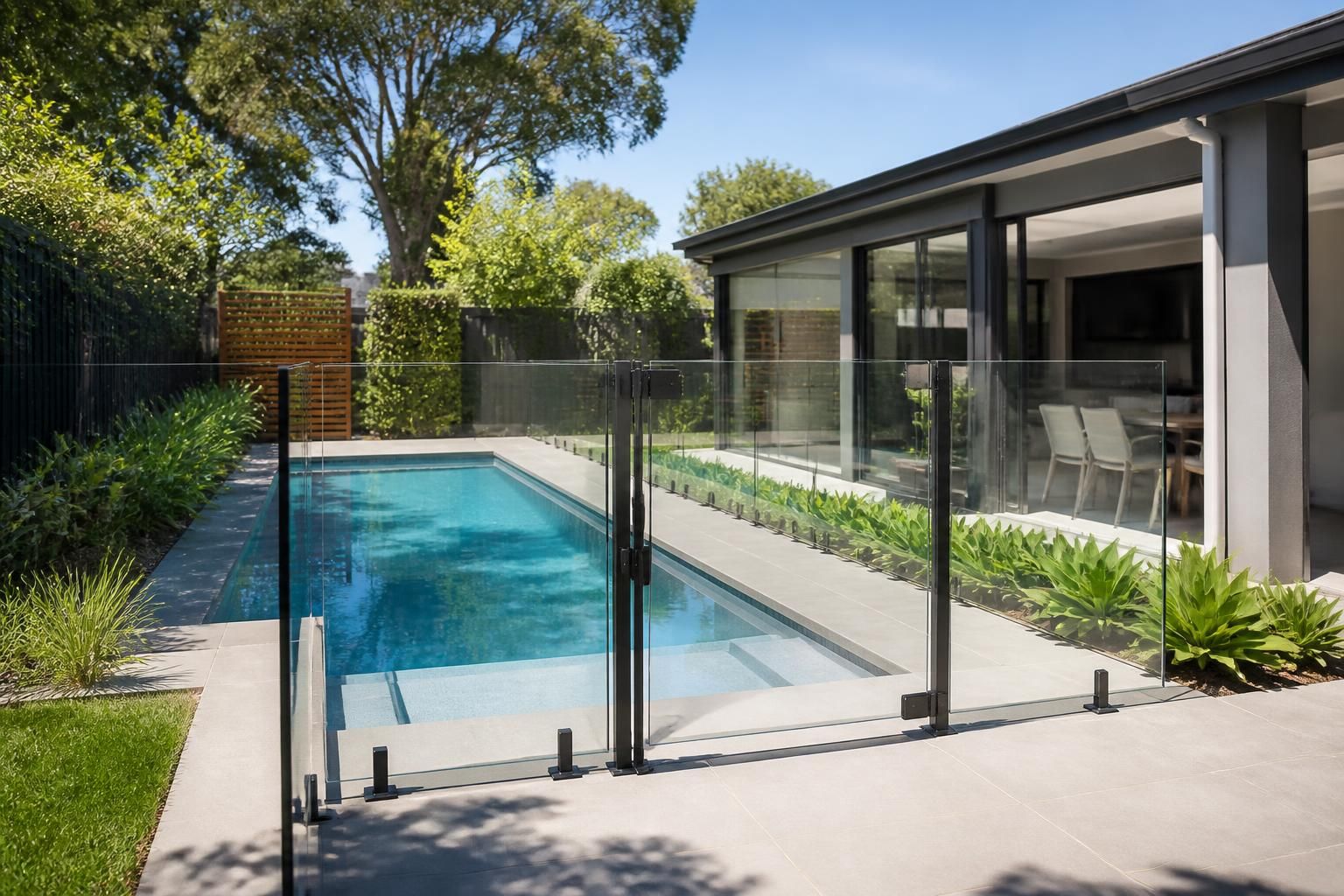
For many homeowners across Victoria, owning a swimming pool or spa isn’t just about luxury—it’s about ensuring the utmost safety for family and visitors. With summer’s increasing warmth, pools provide a refreshing retreat, yet they carry an undeniable responsibility under Victoria’s stringent pool fencing regulations. These regulations are designed to safeguard children and reduce the risk of drowning incidents by enforcing carefully structured safety standards and fencing rules. As 2026 unfolds, staying updated with the latest legislation is essential for every pool owner, whether you’re installing a new structure or maintaining an existing pool barrier. Pool fencing was never purely aesthetic; it represents a critical barrier to protect lives and comply with Victorian safety legislation.
In Victoria, comprehensive pool fencing rules require homeowners to register their pools and spas with local councils and undergo periodic inspections to confirm compliance. The Victorian Building Authority (VBA) oversees these regulations under the Building Regulations 2018, which have been regularly updated to address safety vulnerabilities and incorporate best practices consistent with Australian standards. This article unpacks the key fencing rules, specific barrier requirements, inspection processes, and penalties of non-compliance for 2026, equipping homeowners with the knowledge to navigate this complex landscape confidently. The journey to compliance involves a clear understanding of physical fencing standards, gate requirements, acceptable materials, and the critical ongoing responsibility of maintaining these safety features.
In brief:
- Pool fencing in Victoria must comply with the VBA’s stringent regulations to ensure child safety around pools and spas that hold over 300mm of water.
- Every pool or spa owner is legally obligated to register their facility and secure a compliance certificate, valid for four years, after inspections.
- Mandatory fencing features include a minimum barrier height of 1200mm, self-closing and self-latching gates, and restrictions on climbable objects near the fence.
- Materials such as shatter-resistant glass, metal with vertical bars, and non-climbable timber are all permitted when installed according to standards.
- Failure to comply exposes owners to fines, insurance complications, and legal liabilities. Regular inspections and maintenance are vital for ongoing compliance.
Comprehensive Overview of Victoria’s Pool Fencing Rules and Safety Standards
Victoria’s pool fencing rules are a meticulous blend of safety ambitions and legal mandates designed to prevent accidents, especially involving children. These fencing regulations specify that any swimming pool or spa capable of holding more than 300mm of water must be enclosed within a compliant safety barrier. This includes permanent in-ground pools, above-ground pools, permanent and relocatable spas, and even portable pools installed for more than three consecutive days.
The legislation, governed by the Victorian Building Authority through the Building Regulations 2018, spells out detailed fencing requirements based on Australian Standard AS 1926.1-2012. This standard dictates the nature, construction, and performance specifications of pool fences and barriers. Specific to Victoria, these rules are reinforced with regular inspections and registration systems that ensure pools remain safe over time rather than only at installation.
Owners must register their pools with local councils and the VBA by paying a one-time fee. After registration, a compliance inspection is compulsory every four years, performed by a certified building surveyor or inspector, culminating in the issue of a Form 23 compliance certificate. This certificate legally validates that the pool barrier meets safety requirements and must be lodged with the local council within 30 days of inspection. Inspections thoroughly assess numerous factors such as barrier height, gate performance, gaps, and potential climb hazards, ensuring a holistic safety check that goes beyond mere fence measurements.
Victoria’s regulations also address common points of failure, notably gate mechanism problems and the presence of climbable fixtures near the pool perimeter—for instance, outdoor furniture or BBQs that might provide leverage for a child. The Victorian authorities offer guidance and example scenarios to help owners identify and rectify such issues. For a detailed breakdown of these intricate rules, readers can visit a guide to pool fence regulations in Victoria.
Barrier Requirements: Height, Gaps, and Non-Climbable Zones
One of the most critical specifications in Victoria’s pool fencing regulations involves the physical characteristics of barriers surrounding pools. Barriers must stand at least 1200mm high from the natural ground level to effectively deter accidental entry. Furthermore, gaps between the ground and the bottom of the fence should never exceed 100mm to prevent small children or animals from squeezing underneath.
The law also defines a “non-climbable zone” extending 900mm vertically above the lowest ground level outside the barrier, within which no objects or features should be present that children could use as footholds or handholds. This prohibits placing barbecues, plant pots, pool pumps, or other structures too close to the fence. These measures collectively reduce the risk of children climbing over fences, a major cause of pool-related accidents.
Another vital consideration is the quality and resilience of gates as they provide the most frequent points of entry and failure in pool safety. Gates must:
- Open outward, away from the pool area
- Be equipped with a self-closing mechanism to prevent accidental propping open
- Have self-latching mechanisms situated at a minimum of 1500mm above ground or in inaccessible locations for small children
In practice, this means a pool gate designed with easy adult use in mind but equipped with child-proof features compliant with Australian standards. Technological advancements, such as magnetic latches or spring-loaded hinges, are increasingly employed to meet these strict requirements, enhancing long-term safety and reducing failure rates during inspections. Learn more about these critical elements through detailed resources like Sunshine Alutrade’s homeowner guide on pool fencing regulations.
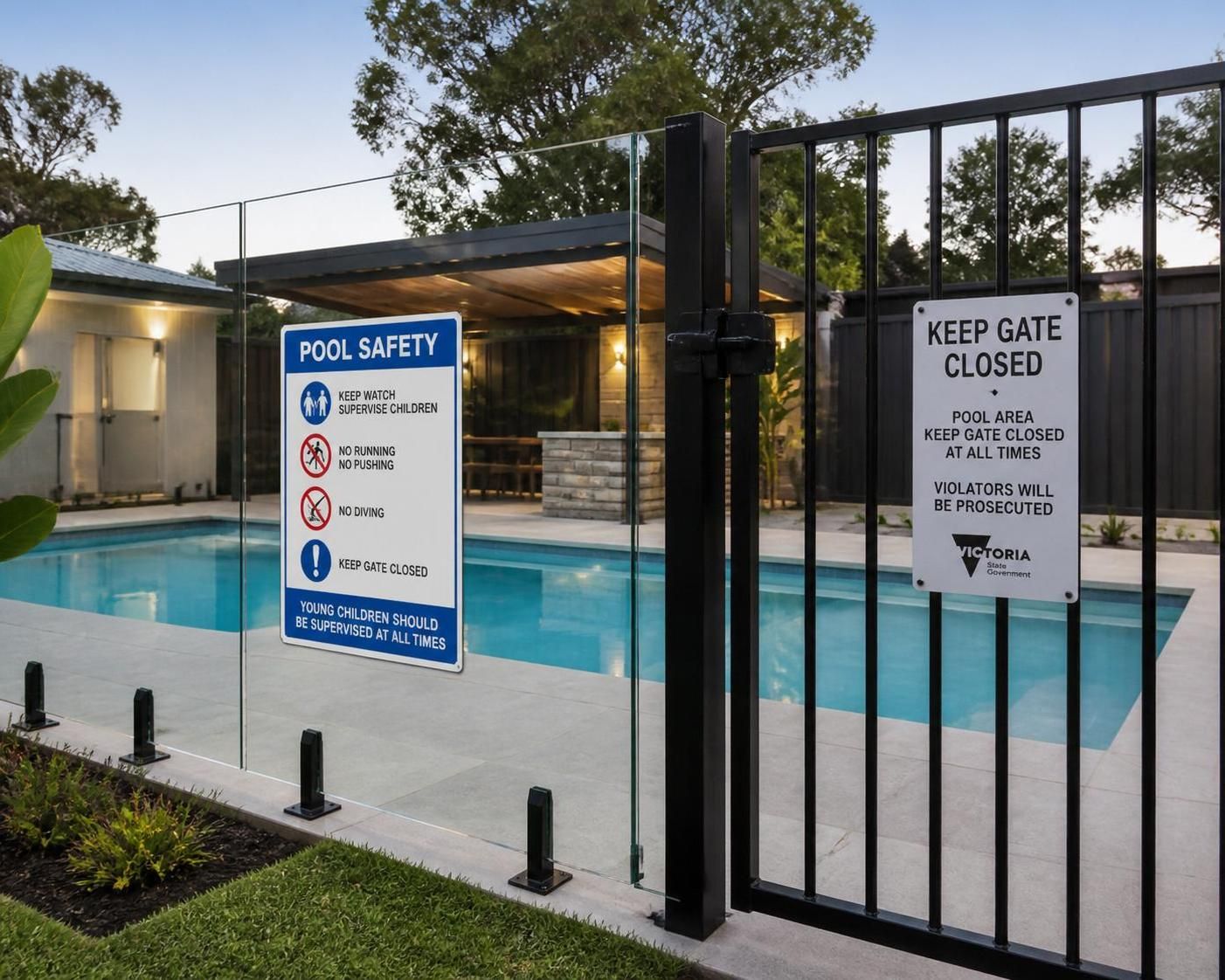
Materials and Construction: Choosing Compliant and Durable Pool Fencing
In Victoria, the approved materials for pool fences must satisfy safety and durability criteria outlined by the VBA and Australian Standards. Popular materials vary depending on property preferences, but the core requirement is that the fencing must be resistant to tampering, weather, and accidental damage, while ensuring no compromise on barrier height or gap compliance.
Glass Fencing remains a favored choice due to its aesthetic appeal and unobstructed views of the pool area. However, only shatter-resistant toughened glass panels securely fixed to posts or frames are permitted. Glass fencing combines safety with style, giving homeowners modern options while adhering to safety regulations. Regular checks for cracks or looseness are essential to maintain compliance and safety.
Metal Fencing, such as aluminium or steel, is commonly used because of its strength and affordability. These fences must feature vertical bars spaced at less than 100mm apart, discouraging climbing and preventing children from slipping through. The metal must be coated or treated to withstand corrosion, especially in outdoor environments exposed to sun and moisture.
Timber Fencing is acceptable if designed to restrict climbing. Smooth surfaces, vertical boards without footholds, and proper maintenance to prevent rot or damage are necessary to ensure long-term safety compliance. Additionally, timber fences often require treatments to resist insect infestations and weathering.
When selecting fencing materials, homeowners should consider both compliance and maintenance. For instance, a glass pool fence may require frequent cleaning to stay visually transparent and safe, while metal fencing demands occasional repainting or rust treatment. Consultations with certified installers help optimize the balance between durability, compliance, and aesthetic preferences. Resources such as Boomba Fencing’s guide on durable and stylish fencing materials provide valuable insights on material choices in Victoria.
Installation Standards and Barrier Performance
The Victorian legislation requires pool fences to be professionally installed by certified practitioners to ensure every element adheres to legal standards—this includes correct height, spacing, secure fastenings, and gate mechanisms. The installation quality directly affects failure rates during inspections, emphasizing the necessity of using experienced installers. Imprecise clipping, incorrect gate hinge alignment, or loose panels can jeopardize compliance.
Additionally, barriers must be designed to resist wear and tear—proper foundations, secure gate posts, and corrosion-resistant hardware are non-negotiable. Homeowners who install fencing themselves without professional certification run the risk of failing mandatory inspections and facing legal repercussions. Ultimately, abiding by the legislative requirements advances community child safety and protects owners from liability.
Regular Inspections, Registration, and Legal Compliance in 2026
Victoria’s approach to pool fencing includes proactive enforcement through registration and periodic inspections. All pools and spas deeper than 300mm must be registered with the Victorian Building Authority and the local council, a step that activates ongoing safety oversight. After each registration, owners must schedule an inspection by a registered building surveyor at least every four years.
The inspection process is a rigorous assessment against AS 1926.1-2012 and the Victorian Building Regulations 2018, with a focus on physical barrier integrity, gate functionality, CPR signage presence, and boundary conditions. Inspectors assess not only the fencing but also the environment immediately surrounding the pool, ensuring no new hazards have emerged through landscaping changes or new furniture placement.
After a successful inspection, owners receive a Form 23 certificate of compliance that must be filed with their council. This certificate is critical for legal proof of compliance and typically lasts four years unless the barrier is altered or repairs are required prematurely.
By law, pool owners maintain responsibility for the barrier’s condition between inspections. This means vigilant upkeep—regularly checking that gates close properly, latches function without fail, and no gaps or damage compromise the barrier’s effectiveness. Local councils have the authority to impose penalties on owners failing to maintain compliant barriers or not completing registrations and inspections.
Estimated costs for inspections typically amount to around $220, covering the onsite check and the issuance of the Form 23 certificate. This fee reflects not only administrative overheads but the expertise of the certifying practitioner. Avoiding surprises, owners are encouraged to arrange inspections well before certification expiry to remain continuously compliant.
Consequences of Non-Compliance and How to Avoid Them
Ignoring or neglecting Victoria’s pool fencing regulations can have severe consequences. Local councils enforce these laws robustly to prevent tragedies around pools, especially for young children. Non-compliance may lead to fines, ranging substantially depending on the severity of the breach and council discretion.
Insurance companies also weigh adherence to fencing laws when handling claims related to pool accidents. Failure to comply with fencing rules can lead to insurance refusals, leaving homeowners financially vulnerable after an incident. Moreover, if an accident occurs due to a non-compliant fence, the pool owner risks legal liability, including potential lawsuits and costly damages.
To avoid these repercussions, pool owners should prioritize compliance through proactive maintenance and timely inspections. Rectifying common failings such as faulty gate latches, climbable objects in safety zones, or missing CPR signage often requires simple, affordable fixes. Professional pool fence inspectors and installers are invaluable partners in this journey, providing guidance, certification, and quality assurance.
Summary Table of Key Victoria Pool Fencing Requirements for 2026
| Requirement | Specification | Purpose |
|---|---|---|
| Barrier Height | Minimum 1200mm above natural ground | Prevents casual or accidental entry |
| Ground Gap | Max 100mm from fence base to ground | Stops children/animals crawling underneath |
| Gate Opening | Outwards from pool area | Avoids trapping children inside pool area |
| Gate Mechanism | Self-closing & self-latching, latch ≥1500mm high | Ensures gate remains closed & secure |
| Non-Climbable Zones | No footholds or climbable objects within 900mm vertically | Stops children climbing over barriers |
| Materials | Shatter-resistant glass, vertical metal bars, or non-climbable timber | Strength, durability, and compliance |
| Registration Frequency | Once, then inspection every 4 years | Continuous safety assurance |
Who must comply with Victoria’s pool fencing regulations?
All property owners in Victoria with swimming pools or spas deeper than 300mm, including portable or relocatable pools set up for more than three consecutive days, are legally required to comply with pool fencing regulations.
What are the penalties for failing to comply with fencing laws in Victoria?
Failure to comply can result in fines issued by local councils, potential insurance claim rejection, and legal liability if accidents occur due to a non-compliant barrier.
How frequently must pool safety barriers be inspected?
Inspections by registered building surveyors or inspectors are mandatory every four years, with results submitted to the local council to maintain compliance with Victorian legislation.
What gate features are mandatory under Victoria’s pool fencing rules?
Gates must open outwards away from the pool, be self-closing from any open position, and have self-latching mechanisms installed at least 1500mm above ground level or out of reach of small children.
Are glass fence panels allowed for pool fencing in Victoria?
Yes, but only if the glass is toughened and shatter-resistant, securely fixed to fittings that comply with Australian safety standards to prevent breakage and ensure child safety.