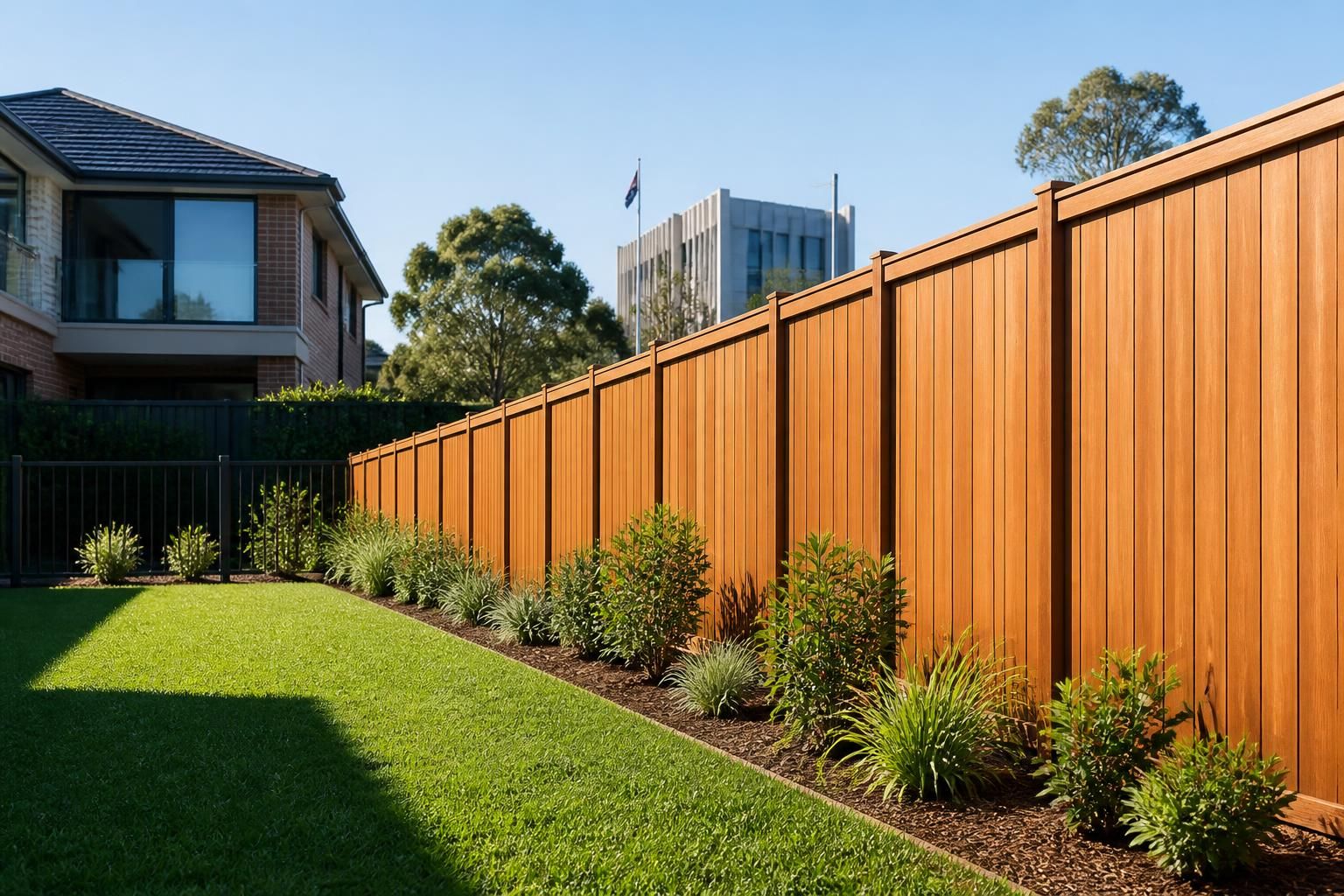
Planning to install or replace a fence around your property in Australia? Before you jump into the project, it’s crucial to understand the intricacies of council approval and fencing regulations that vary across states and local councils. Whether you are looking at boundary fencing between neighbours or residential fencing for privacy and security, the requirements for building permits and planning permission can significantly impact your project timeline and design choices. Many homeowners are surprised to discover that while small or replacement fences may not need formal approval, any fence that exceeds specified height limits or is constructed in particular zones demands prior consultation with the local council. Compliance with these fencing laws ensures your property fencing meets safety, aesthetic, and legal standards, avoiding disputes and penalties.
In brief, here’s what you need to know about council approval and fencing regulations in Australia:
- Council approval is generally not required for replacing a fence with one of similar height and style.
- Fences above 1.8 to 2.1 metres often require formal approval depending on your local council’s rules.
- Boundary fencing between neighbours involves shared responsibility and should be discussed beforehand to avoid disputes.
- Different councils and states have varying regulations; contacting your local council is the first step for compliance.
- Innovative fencing options like modular walls may bypass typical masonry restrictions but still need to meet specific council criteria.
Understanding the Basics of Council Approval for Fencing in Australia
Australia’s fencing regulations are determined primarily by each local council, with varying rules depending on location, zoning, and fence type. At the core, council approval is intended to oversee that fencing meets community safety standards, maintains neighbourhood aesthetics, and respects boundary laws. Generally, straightforward projects such as replacing an existing fence with one of a similar height and placement do not require formal building permits or planning permission. However, whenever the fence height exceeds local regulations (often around 1.8 or 2.1 metres), or if the fence is situated in specific zones such as heritage areas or near road intersections, council approval becomes mandatory.
For example, in Perth, boundary fences commonly have a height restriction of 1.8 metres, but neighbours can agree to extend this height to 2.1 metres. Councils require planning permission if the fence exceeds this height, sometimes up to 2.4 metres, with additional requirements for design and materials. Similarly, South Australian councils generally require approval for masonry fences over one metre in height or for fences over 2.1 metres. These differences illustrate the need for homeowners to consult their own council’s guidelines before proceeding with any fencing project.
As a best practice, engaging with your local council upfront can prevent costly delays or redesigns. Councils often publish fencing rules on their websites or provide downloadable resources, and their staff can offer specific advice based on your property’s zoning and regulations.
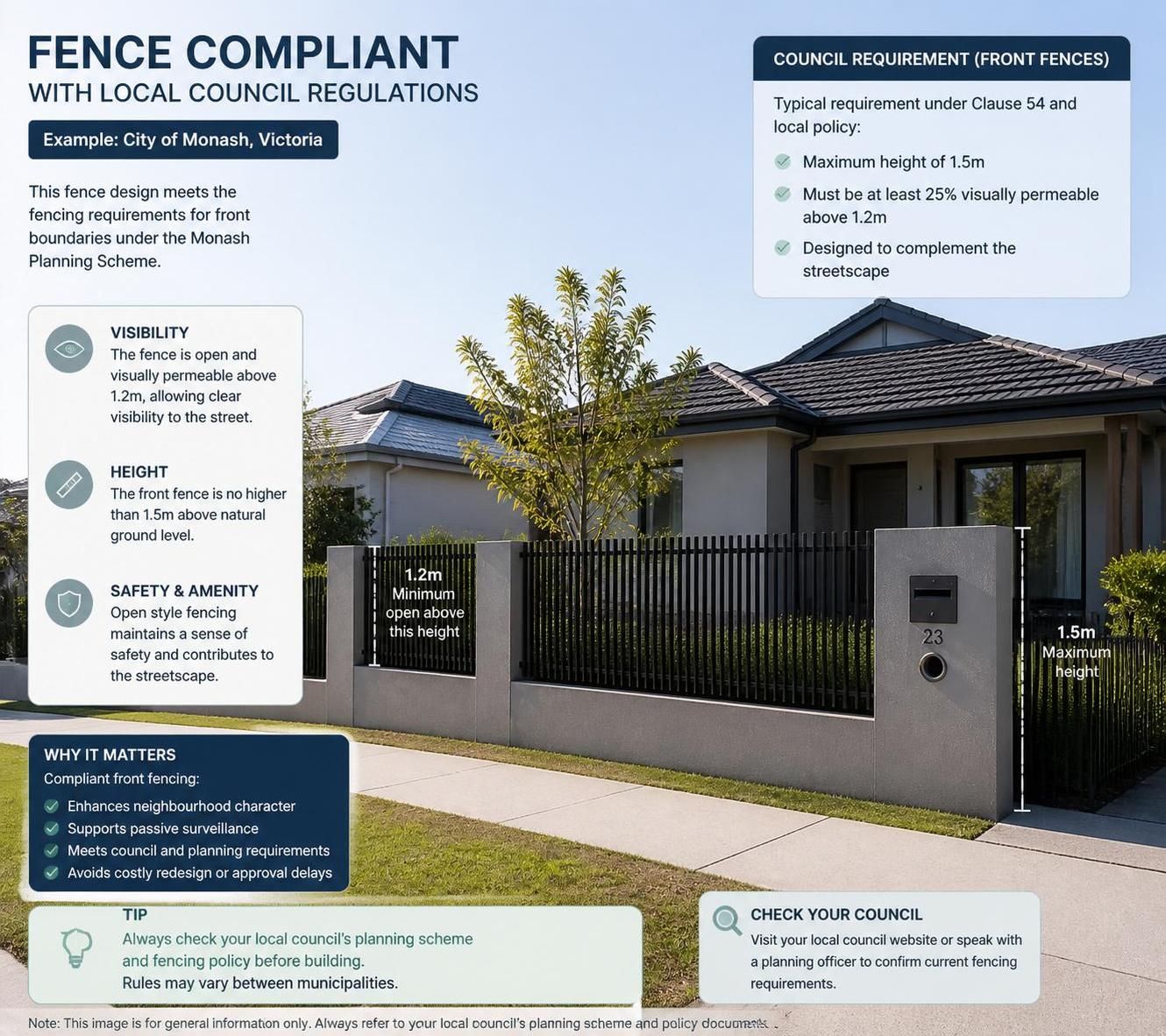
The Importance of Boundary Fencing Laws and Neighbourly Agreements
Boundary fencing is not just about marking the edge of your property; it involves legal responsibilities and cooperation with your neighbours. In fact, boundary fencing laws are designed to regulate how costs and upkeep responsibilities are shared between adjacent property owners. These laws vary by state but tend to share core features such as requiring mutual agreement or tribunals to settle disputes.
For instance, the approach to boundary fence disputes in Australia advises homeowners to communicate clearly and early with neighbours about fencing plans and expenses. It is legally expected that neighbours split costs equitably for boundary fences unless otherwise stipulated.
Disputes can arise when one neighbour installs a fence higher than the agreed standard or uses materials that the other finds unacceptable. Some local councils have mediation services to handle such conflicts, while others rely on the Dividing Fences Acts that are specific to each state. For example, if one neighbour wishes to replace an old fence with a new, taller fence, obtaining council approval and neighbour consent are crucial steps to avoid confrontations and possible legal repercussions.
The table below summarises general rules for boundary fencing responsibilities in key Australian states:
| State | Shared Cost Responsibility | Height Limits Without Approval | Dispute Resolution |
|---|---|---|---|
| New South Wales | Shared equally unless agreed otherwise | Up to 1.8m usually exempt | Local Land Services or NCAT tribunal |
| Victoria | Neighbours share costs fairly | Typically 2.0m without approval | Magistrates’ Court or mediation |
| Queensland | Equal contribution unless agreed | Up to 1.8m for most fences | Queensland Civil and Administrative Tribunal |
| South Australia | Standard laws for fair cost sharing | Over 2.1m requires approval | SA Civil and Administrative Tribunal (SACAT) |
This overview reinforces that while fencing might seem a straightforward home improvement, respecting fencing regulations and neighbourly agreements is vital for smooth project execution.
When Does Your Fencing Project Require Planning Permission or Building Permits?
One of the most frequently asked questions about residential fencing in Australia is whether council approval, in the form of planning permission or building permits, is necessary. The answer depends largely on factors including fence height, material, location, and local zoning laws.
Typically, fences up to 1.8 or 2.1 meters that match existing designs on the property are exempt from building permits. However, there are exceptions:
- Fences higher than the prescribed limits generally require council approval.
- Masonry, brick, or rendered fences over one metre tall usually need permits.
- Fences near road intersections or heritage precincts often have stricter controls.
- Temporary fencing, especially on commercial sites, almost always needs explicit approval for safety reasons.
For residents in Sydney, knowing the specifics of local fencing laws is critical. The Sydney fencing regulations guide explains that while simple residential fences often don’t need approval, any project that deviates from height limitations or involves heritage overlays does. This helps protect the historical context and aesthetic harmony of neighbourhoods.
Many councils provide exemptions or fast-tracked approvals for compliant fences that meet exempt and complying development provisions. These enable property owners to proceed without lengthy planning applications, provided they adhere to standards set by the state planning policies.
Innovative Fencing Solutions and Their Impact on Council Approval Processes
Modern fencing technologies and designs increasingly offer alternatives that simplify compliance with council regulations. One such innovation is the modular wall system, which combines aesthetics with easier approval pathways.
Unlike traditional masonry walls which often require detailed council permissions, modular fences typically fall under the category of post-and-rail systems. This classification carries fewer restrictions, allowing homeowners to achieve a brick-like appearance without the bureaucratic burden. Nick Holden, the inventor of the first modular wall system in 2002, famously developed this product after facing council refusal to build a traditional brick fence. His creation provides the elegance of masonry with the compliance advantages of simpler fence types.
Despite this, it remains important for property owners to consult their local council regarding any property fencing project. While companies like ModularWalls do not directly handle council approvals, they support clients with resources and advice to ensure the design meets local requirements.
Exploring alternatives such as aluminium slat fences, treated timber, or even Colorbond fencing might also optimize cost and approval timelines. For a detailed exploration of fence types and cost expectations, homeowners can refer to guides on fencing costs and options across Australia.
How to Navigate Your Local Council’s Fencing Regulations and Approval Process
Australian councils each provide a set of regulations that outline fencing limits, application procedures, and associated fees. To efficiently manage your fencing project, here’s a step-by-step guide to understanding and navigating these regulations:
- Identify your local council: Use state indexes to find your council’s website or contact details. Councils related to your area include NSW, VIC, QLD, SA, TAS, WA, and NT.
- Review published fencing regulations: Check for downloadable fact sheets or guidance notes tailored to residential or boundary fencing.
- Assess your fencing plan: Confirm fence height, materials, and location adhere to local limits.
- Consult your neighbours: Early communication avoids disputes and helps share costs for boundary fences.
- Submit applications if necessary: Complete any required development applications early to avoid delays.
- Prepare for inspections: Some councils may require site visits during or after construction.
Being proactive about council consultation reduces risk and ensures your fencing project moves smoothly, preserving good neighbourly relations and compliance with all regulations.
For residents unsure where to start, resources like ModularWalls’ fencing project council regulations overview provide foundational advice, helping homeowners tailor their plans to local rules.
When do I need council approval for fencing in Australia?
Council approval is typically required when fences exceed set height limits (commonly 1.8 to 2.1 metres), when using masonry materials beyond certain heights, or when fences encroach on special zones such as heritage precincts or road intersections.
Do I need to consult my neighbours before building a boundary fence?
Yes, communicating and agreeing on the fence design, height, and cost-sharing with your neighbours is highly recommended to avoid disputes and facilitate smooth project completion.
Are there any fencing projects exempt from building permits?
Many local councils exempt simple fence replacements where the height and style remain consistent with existing structures. Additionally, fences classified as exempt or complying developments under local planning schemes may not require formal permits.
What types of fences usually require building permits?
Masonry fences over one metre, fences taller than 2.1 metres, and temporary or commercial site fencing often require formal approval and building permits.
Where can I find my local council’s fencing regulations?
Most councils provide resources and contact details on their websites, accessible through state council indexes, to help residents comply with fencing requirements.